Hearing Aid Types and Costs: A Complete 2026 Comparison
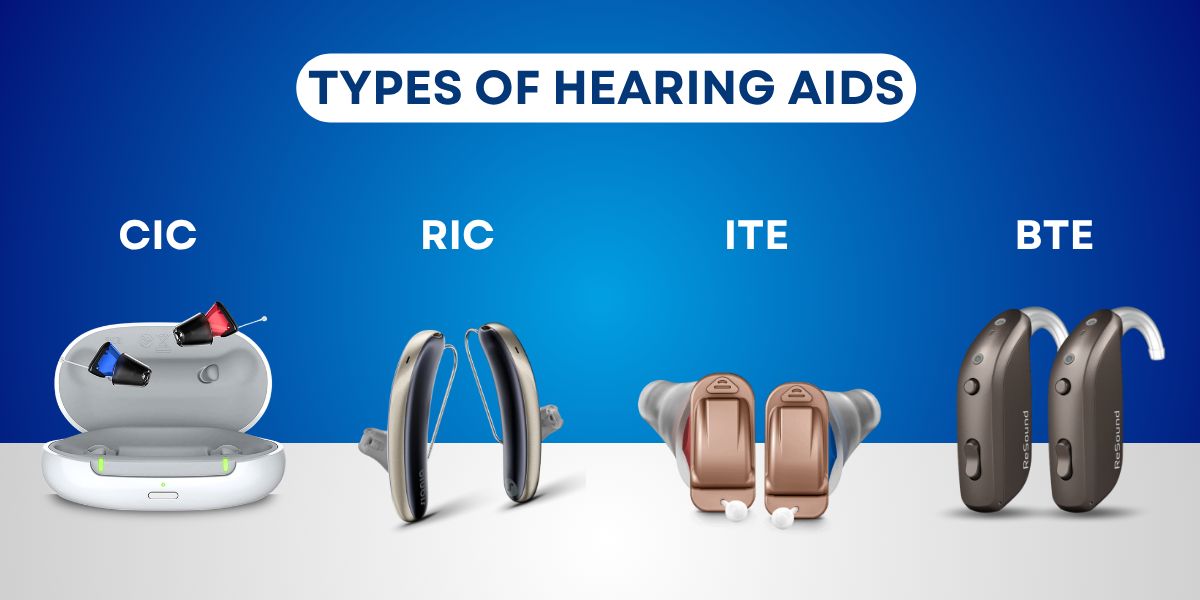
Hearing aids come in several distinct styles, and the type you choose affects not just how visible the device is, but also its price, comfort, battery life, and suitability for your degree of hearing loss. Many first-time buyers assume style is purely a cosmetic choice, but in reality it has real functional consequences — from how much power the device can deliver to how easy it is to handle day to day. Here's a full breakdown of hearing aid types and costs in India for 2026.
Hearing Aid Types Compared
BTE (Behind-the-Ear)
Sits behind the ear with a thin tube or wire connecting to the ear canal. It's the most robust, easiest to handle, and suitable for the widest range of hearing loss — from mild all the way to profound. Its larger size also means longer battery life and room for more powerful amplification circuitry. Price: ₹8,000 – ₹60,000 per ear
RIC (Receiver-in-Canal)
A smaller body sits behind the ear while the receiver itself sits directly in the canal — a popular middle ground between size, discretion, and power. RIC devices are currently the most commonly recommended style for moderate hearing loss due to this balance. Price: ₹20,000 – ₹1,50,000 per ear
ITE (In-the-Ear)
A custom-molded shell fills the outer ear bowl. Easier to handle than smaller in-canal styles, with good battery life and enough room for physical controls like volume buttons, which some users — especially elderly users — find easier to manage than tiny touch controls. Price: ₹25,000 – ₹1,80,000 per ear
ITC/CIC (In-the-Canal / Completely-in-Canal)
Smaller custom devices that sit partially or fully within the ear canal, offering more discretion than BTE or ITE styles while still handling mild-to-moderately severe hearing loss well. Price: ₹35,000 – ₹2,50,000 per ear
IIC (Invisible-in-Canal)
The smallest and most discreet style, sitting deep in the canal and virtually invisible to others. Because of the reduced size, IIC devices are generally best suited to mild-to-moderate hearing loss rather than severe cases, and their small batteries typically need more frequent changing or charging. Price: ₹40,000 – ₹4,50,000 per ear
How to Choose the Right Type
| Priority | Recommended Type |
|---|---|
| Maximum power for severe loss | BTE |
| Balance of size and performance | RIC |
| Easier handling (elderly users, dexterity issues) | BTE or ITE |
| Discretion/invisibility | CIC or IIC |
| Active, sweat/water exposure | BTE or RIC (check waterproof rating) |
| Longest battery life between changes | BTE (largest battery compartment) |
What Else Affects Cost Within Each Type?
Regardless of style, price within a type still varies based on:
- Technology tier (entry, mid, premium chip) — often a bigger factor than the style itself.
- Connectivity (Bluetooth streaming to phone/TV)
- Battery type (disposable vs. rechargeable)
- Extra features (tinnitus masking, automatic environment switching, fall detection)
This means a basic BTE with premium chip technology can sometimes cost more than a mid-tier RIC with basic technology — style alone doesn't determine final price, and it's worth looking at both factors together rather than assuming smaller automatically means pricier or vice versa.
Which Type Fits Older Adults Best?
For elderly users, especially those with limited hand dexterity or reduced fine motor control, BTE and ITE styles are usually easier to insert, remove, and clean than tiny invisible styles — even though they're typically more affordable too. Larger devices are also generally easier to locate if dropped and less likely to be misplaced compared to the smallest invisible models. That said, some elderly users strongly prefer the discretion of smaller styles, so comfort and personal preference should factor in alongside practicality.
Which Type Fits Active Lifestyles Best?
Users who exercise regularly, sweat heavily, or spend time outdoors should look closely at water and dust resistance ratings (often listed as an IP rating) alongside style. RIC and BTE styles generally offer better resistance ratings than smaller in-canal styles, simply because there's more room for protective sealing. Phonak, in particular, is well known for offering some of the most rugged, water-resistant options across its RIC and BTE ranges.
Which Type Fits Severe or Profound Hearing Loss?
For more significant hearing loss, BTE devices remain the most reliable choice, since they can house stronger amplification circuitry and larger receivers without feedback issues (the whistling sound that can occur when amplified sound leaks and gets picked up again by the microphone). Smaller styles like CIC and IIC are generally not recommended for severe-to-profound loss, regardless of budget, simply because of physical size constraints.
Style and Comfort During the Adjustment Period
New hearing aid users often go through a short adjustment period as their brain relearns to process amplified sound. Larger styles like BTE and ITE tend to feel less intrusive during this period for many first-time users, since they don't seal the ear canal as completely as smaller in-canal styles. This is one more reason a trial period — regardless of which type you're leaning toward — is genuinely useful before committing to a purchase.
Finding the Right Type and Price for You
The right hearing aid type depends on your hearing test results, ear shape, lifestyle, and personal comfort preferences — not just aesthetic preference or price alone. Soft Hear's audiologists assess all of this before recommending a device from the full hearing aid range, sourced from brands like Phonak and Signia.
Want expert help choosing the right type and price? Book a free hearing test with Soft Hear.
Frequently Asked Questions
Which hearing aid type is cheapest?
BTE (Behind-the-Ear) styles are generally the most affordable, starting around ₹8,000 per ear.
Which hearing aid type is most discreet?
IIC (Invisible-in-Canal) devices are the smallest and least visible, though they're priced at the premium end and typically better suited to mild-to-moderate hearing loss.
Can I switch hearing aid types later?
Yes, but it's best to choose the right type upfront based on a proper hearing test to avoid unnecessary repurchases.
Which type is best for severe hearing loss?
BTE devices are generally recommended for severe-to-profound hearing loss because they can house stronger amplification without feedback issues.